


In modern conditions, young people often suffer from osteochondrosis.This is due to a sedentary lifestyle, because we often spend our free time at the computer - sitting, of course.Osteochondrosis can cause a lot of discomfort and significantly affect the quality of life.Fortunately, the disease can be treated symptomatically: today there are many therapeutic solutions for this.
Symptoms and causes of osteochondrosis

Osteochondrosis is a degenerative damage to the intervertebral discs and adjacent bone tissue.It can be cervical, thoracic and lumbar - it all depends on the area of the spine where the pathological changes began.In osteochondrosis, the intervertebral disc is primarily affected.Due to metabolic disorders, it deforms and loses elasticity, which causes the distance between the vertebrae to decrease and the nerves coming from the spinal cord to become pinched.The result is severe pain, limited mobility, rapid fatigue and changes in posture, which lead to a further deterioration of the situation.
The main reason for the development of osteochondrosis is an unbalanced and excessive load on the spine, which occurs, for example, with excess weight, sedentary work or other reasons for being in an uncomfortable position for a long time.Osteochondrosis can be caused by flat feet or daily wearing of shoes with heels that are too high, sleeping on an uncomfortable mattress, and weakness of the muscle corset.Pregnant women are also at risk.
However, osteochondrosis is not always the result of direct stress on the vertebrae.Metabolic disorders, chronic poisoning, hormonal and autoimmune diseases, a deficiency of certain vitamins (especially D, C and B vitamins), injuries and ultimately age-related changes are often the cause of this disease.
Unfortunately, neurologists often diagnose “osteochondrosis” whenever there are structural changes in the body.For example, if an X-ray reveals changes in the spine such as tilts, growths, scoliosis or bends, there is a high probability that the patient is being treated for osteochondrosis.If there are no abnormalities in the spine, the diagnosis of “psychogenic pain” can be made.Meanwhile, the cause of the back pain remains unclear.
Chinese medicine looks at the human body as a whole.Therefore, when a Traditional Chinese Medicine (TCM) doctor makes a diagnosis, he gets to the bottom of the problem that he identifies based on the symptoms.Removal of the “root” of the disease also alleviates its manifestations and, among other things, helps eliminate back pain.
Symptoms of osteochondrosis largely depend on the location of the source of the disease.With osteochondrosis of the cervical spine, the disease begins with pain in the neck and arms, headaches and numbness in the fingers.Osteochondrosis of the thoracic region is characterized by the following symptoms: acute back pain, tingling in the chest, difficulty breathing.Osteochondrosis of the lumbar region is accompanied by pain in the lower back and legs, numbness in the feet, and disorders of the genitourinary tract are also observed - urination disorders, sexual dysfunction in men, problems with the ovaries in women.
From the point of view of traditional Chinese medicine, the list of manifestations of the disease is supplemented by the following symptoms:
- pain radiating to the buttocks or legs;
- muscle heaviness and stiffness;
- feeling of cold in the back;
- night sweats;
- Heat in palms and soles of feet;
- tinnitus;
- pain in the lower abdomen;
- coldness in the extremities and lack of energy;
- stabbing pain anywhere;
- increased body temperature;
- Swelling in the limbs.
The pulse can be different: from deep, thready and slow to vibrating and frequent.Symptoms such as the type of pulse may depend on the underlying cause of the disease.
Most often, people notice the first signs of osteochondrosis around the age of 25, but ignore them for a long time.Therefore, patients usually turn to the doctor at the age of 30-35, and many of them have osteochondrosis in an advanced form.
How is osteochondrosis treated?
If your doctor has diagnosed you with osteochondrosis, be patient - the treatment will be lengthy.An integrated approach significantly speeds up the healing process, but it is definitely impossible to cure osteochondrosis in a month.
The course of treatment of osteochondrosis should be divided into several stages, each of which pursues specific goals.
The first step is to eliminate pain.You may be recommended to wear a special corset that supports your back and neck in a physiologically correct position.Painkillers and various procedures are prescribed: both from the arsenal of physiotherapy and from traditional medicine, for example, acupuncture, which has long been officially recognized and included in the nomenclature of medical services.
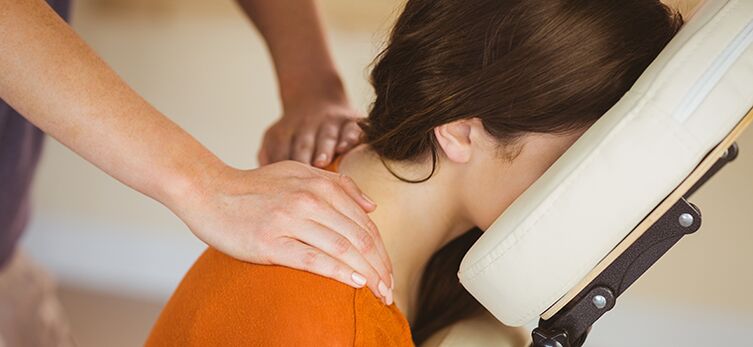
The second stage of treatment of osteochondrosis is the restoration of intervertebral discs and the prevention of degenerative changes.As a rule, physiotherapy, massage, manual therapy, acupuncture, diet correction and physiotherapy procedures are indicated to improve blood circulation and normalize metabolic processes.
A neurologist can prescribe pain relievers and anti-inflammatory medications.If necessary, they resort to blockade with novocaine or more serious treatment to relieve the spasm.However, the focus of the disease remaining in the body means that the disease recurs after some time.
In practice, doctors of traditional Chinese medicine often prove that the diagnosis of “osteochondrosis” is made incorrectly in many situations.In cases where this conclusion is confirmed, the TCM doctor relieves the patient's swelling and begins the restoration of tendons and muscles.Spasms of the longitudinal and oblique muscles are gradually eliminated and the ability of the joint to move fully returns.Such treatment promotes recovery in most cases.
Treatment of osteochondrosis of the thoracic spine
With osteochondrosis of the thoracic spine, the patient also needs to reconsider his habits: in order for the treatment to bring the desired results, it is necessary to dose the loads, alternate walks with rest, sometimes it is advisable to walk with a cane for some time.Drug treatment consists of taking non-steroidal anti-inflammatory drugs, relaxants, B vitamins and glucocorticosteroids.
To treat this form of osteochondrosis, in addition to classic medical massage, acupressure, acupuncture, leech treatments, physiotherapy and herbal medicine are also used.All of these procedures can be performed either in a regular clinic or in a licensed oriental medicine center.
Treatment of osteochondrosis of the cervical spine
Cervical osteochondrosis is also very common in young people - it is sometimes even diagnosed in schoolchildren and students who spend too much time with textbooks and computers.This form of osteochondrosis is dangerous because it can lead to complications such as blurred vision or increased intracranial pressure, which is manifested by severe headaches.
To treat osteochondrosis of the cervical spine, non-steroidal anti-inflammatory drugs and muscle relaxants are used, as well as a series of injections with B vitamins.
Massage of the collar area, ultrasound and electrophoresis may also be prescribed.It is extremely important to lead an active lifestyle, develop correct posture, take breaks at work and do a little warm-up in the middle of the working day.
Among the means of traditional (including oriental) medicine in the treatment of this type of osteochondrosis are widely used: acupuncture, acupressure and herbal remedies - phytotherapeutic drugs improve metabolism and the functioning of small vessels, relieve inflammation, which has a positive effect on health in general and the musculoskeletal system in particular.
Treatment of osteochondrosis of the lumbosacral spine
In the treatment of osteochondrosis of the lumbar spine, the habit of dosage of loads plays an important role: you should not spend too much time on your feet and sitting, you need to rest more often lying down.In addition, you will need to wear a corset for some time to improve your posture.
As with cervical osteochondrosis, with lumbar osteochondrosis, non-steroidal anti-inflammatory drugs and muscle relaxants, B vitamins, often glucocorticosteroids, enzymes, as well as ointments that improve blood circulation and relieve pain are prescribed.
Massage, exposure to healing mud and electrophoresis with painkillers, heating, including hot stones are indicated - this is the stone therapy that has been popular in recent years.
Treatment of osteochondrosis using traditional Chinese medicine (TCM) methods.
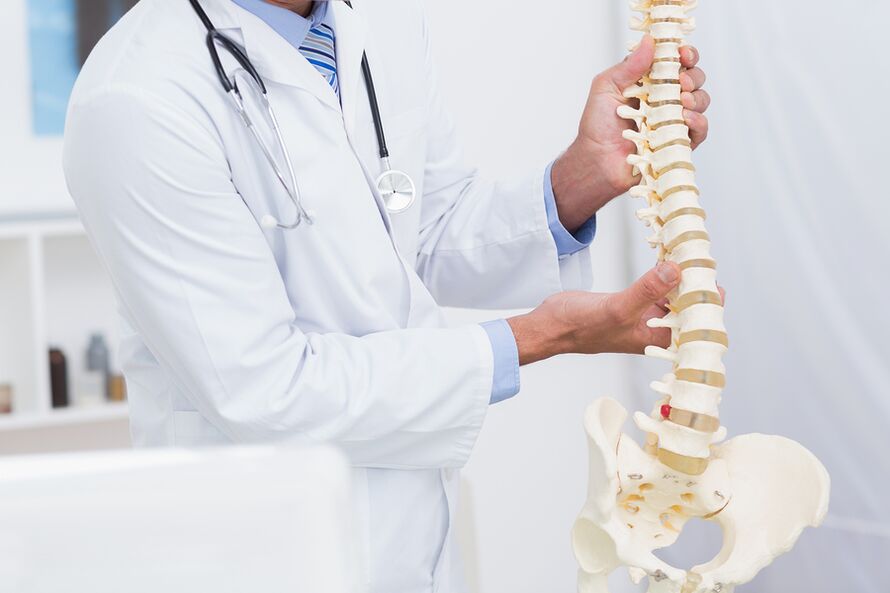
The approach to treating various types of osteochondrosis practiced in Traditional Chinese Medicine deserves special attention.From the perspective of the thousands of years of experience of Chinese doctors, acupuncture, also called acupuncture, is the most important method for treating osteochondrosis.First, the TCM doctor identifies priority hypersensitive (acupuncture) points for each patient.He acts on them with the finest needles.This triggers a response from the body that helps rebuild damaged cartilage and bone and restore mobility to joints.
In order to consolidate the therapeutic effect and keep the body in shape, after therapy it is recommended to repeat acupuncture courses in the future with a certain frequency, but for preventive purposes.
The technique of needle placement and the duration of the acupuncture session are influenced by the diagnosis and the patient's condition.As a rule, acupuncture sessions are well tolerated by all patients, although sensations after the procedure vary from patient to patient.For some, the insertion of needles goes unnoticed;Others may experience itching and mild pressure, and others may even fall asleep.
It cannot be said that the occurrence of osteochondrosis is due to a single factor - most often the cause of the development of the disease is an overall incorrect lifestyle.Therefore, treatment must be comprehensive.With a vitamin-rich diet, which also includes avoiding fatty foods, alcohol and smoking, as well as precisely coordinated physical activity in combination with therapeutic and medication methods, better results can be achieved than simply taking tablets.